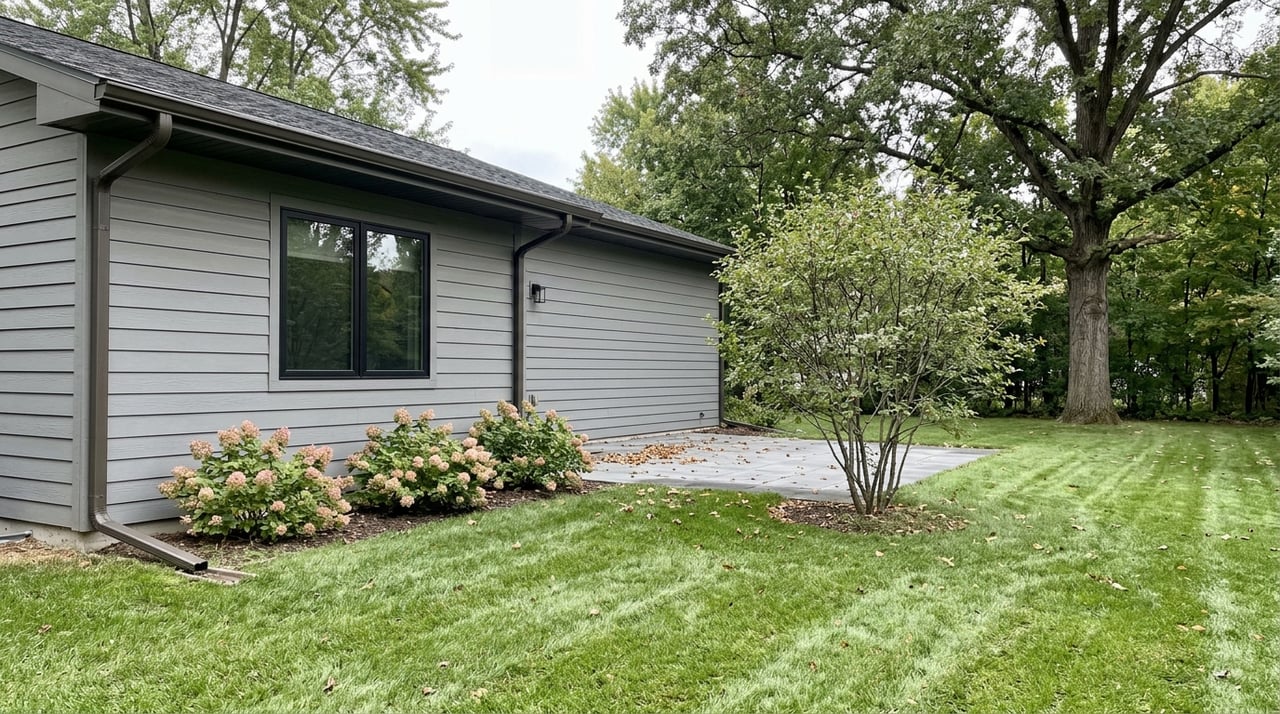
A buyer we worked with this spring had two listings pulled up side by side: a three-bedroom colonial on Madison's west side, and a nearly identical floor plan eight minutes away in Middleton. The Middleton home was priced about $65,000 higher. She assumed the tax bill would tell the same story, that the more expensive house would also be the more expensive one to hold onto every year.
It wasn't. And once you understand why, you understand something about Middleton that the median price alone won't tell you.
The Number Everyone Sees First
Middleton has carried some of the highest home values in Dane County for a while now, and 2026 hasn't changed that. Zillow's home value index put the typical Middleton home at $528,222 in May 2026, up 2.2% year over year. Redfin recorded a median sale price of $559,000 over the three months ending in May 2026, with homes moving in an average of 55 days, down from 67 days the year before. Movoto's June 2026 figures showed a median sold price of $559,450, with 188 homes changing hands that month, up from 136 a year earlier. The exact number shifts depending on whether you're looking at an index of all homes or a snapshot of actual closings, but the direction is consistent: Middleton sits well above the Dane County median of roughly $367,000, and property tax data compiled by Ownwell lists Middleton as having the highest median home price of any municipality in the county.
That's the part every buyer researches before they ever call an agent. It's also only half the picture.
The Bill That Doesn't Match the Price Tag
Here's the part that surprised our buyer. Ownwell's Dane County property tax data puts Middleton's median effective property tax rate at 1.57%, which is close to the Wisconsin state median of 1.43% but noticeably below the Dane County median of 1.87%. Madison, by contrast, carries the highest effective rate anywhere in the county at 3.62%.
Put those next to each other and you get a genuinely odd result: the city with the county's priciest homes has one of its lighter relative tax loads, while a comparable home closer to the Capitol can cost less to buy and more to hold.
There's a wrinkle worth knowing before you write an offer, too. Not every address in Middleton pays the same rate. The city sits across two school district boundaries, and its own property tax page lists a 2025 mill rate of $19.00 per $1,000 of assessed value for properties in the Middleton-Cross Plains Area School District, versus $18.94 for the pocket of homes that fall into the Waunakee school district. Ownwell's ZIP-level breakdown shows the same pattern playing out in dollar terms: homes in the 53562 ZIP carry a median effective rate of 1.57%, while 53597 runs closer to 1.68%. Two houses a few blocks apart, same city, different tax reality, driven entirely by which side of an invisible school district line they sit on.
| Location | Effective Property Tax Rate | Note |
|---|---|---|
| Middleton (53562) | 1.57% | Ownwell, 2026 data |
| Middleton (53597) | 1.68% | Ownwell, 2026 data |
| Dane County median | 1.87% | Ownwell, 2026 data |
| Madison | 3.62% | Highest in Dane County, per Ownwell |
Why the Line Runs Where It Does
The gap isn't an accident, and it isn't recent. Middleton has spent decades building a tax base that leans unusually hard on commercial and manufacturing property instead of homeowners. In a Business View Magazine interview about the city's economic strategy, City Administrator Mike Davis described the typical suburb's tax structure this way: "Most communities have in the neighborhood of 75-80 percent residential tax base." At the time, Middleton's own split ran closer to 55% residential, with manufacturing and commercial property covering the other 40 to 45%, a mix the city built on purpose rather than arrived at by accident.
That imbalance exists because Middleton has spent decades courting employers, not just homebuyers. American Girl, the doll company owned by Mattel, has operations there. So does Electronic Theatre Controls, Spectrum Brands, maker of Rayovac batteries, and UW Health, which is headquartered in the city. The city's Tax Incremental Financing District 3, created in 1993 with a base value of $34.1 million, had generated more than $624 million in new taxable value by the time the city detailed its strategy in that same interview, funded by roughly $65 million in city investment in the district's infrastructure. Layer on a figure Middleton's own economic development materials still cite today, that the city is a net importer of workers with an estimated 10,000 more people commuting in each day than commuting out, and you get a residential tax base that's effectively subsidized by everyone who parks in a Middleton office lot and drives home to Sun Prairie or Cross Plains at 5 p.m.
Homeowners aren't paying for that infrastructure and those services on their own. The businesses that fill Middleton's office parks and light-industrial buildings are picking up a bigger share of the bill than they would almost anywhere else in the county. That's not a coincidence buyers should ignore. It's arguably part of what they're paying the price premium for.
The Building Boom Aimed at a Different Buyer
If Middleton's commercial success explains the tax math, its current construction pipeline explains why the for-sale supply hasn't loosened up to match it. The city's economic development tracker lists Belle Farm, a new subdivision planned around wellness and sustainability with up to 730 multifamily units, 150 single-family homes, a 10-foot off-road bike path, a boardwalk, and a dog park, alongside Redtail Ridge, which mixes new housing types with parkland and a retirement community component. Downtown, T. Wall Enterprises has partnered with the Bruce Company to redevelop 17 acres along Pheasant Branch Creek into the Garden District, a project slated to bring roughly 800 apartment units, 120 hotel rooms, and retail space to the corridor, with the first phase alone adding 170 luxury apartments.
Look closely at those numbers and a pattern emerges. Most of what's under construction in Middleton right now is rental housing, not single-family for-sale inventory. Belle Farm's 730 multifamily units dwarf its 150 single-family lots. Redtail Ridge and the Garden District lean the same way. That matters for anyone shopping the for-sale market specifically: a wave of new apartments can ease rental pressure and add rooftops to the tax base, but it does very little to relieve competition for the three- and four-bedroom single-family homes that most buyers researching Middleton actually want. The single-family supply crunch that's helped push prices up isn't likely to ease just because cranes are visible from the highway.
For buyers thinking about life stage rather than just square footage, Redtail Ridge's retirement community component is also worth watching if you're weighing options for an aging parent or planning ahead for your own downsizing timeline. It's early, but it's one of the few local projects explicitly built with that transition in mind.
What This Means If You're Comparing Middleton to Madison
None of this means Middleton is overpriced, and it doesn't mean Madison is the better deal by default. It means the sticker price and the ownership cost are two different questions, and the second one deserves as much attention as the first.
If you're comparing a Middleton listing in Middleton Hills, near the Conservancy by Pheasant Branch, or just across the line into Bishops Bay in the Town of Westport, against something similar in Madison, run both numbers. Ask which school district a specific parcel falls under, since that alone can shift your effective rate by a tenth of a point or more. Ask what the total annual carrying cost looks like next to the purchase price, not just the price itself. A home that costs more up front but taxes at a meaningfully lower effective rate can, over a five or ten year hold, close a gap that looked much wider on day one.
That's the kind of math that's easy to miss when you're comparing listings on a screen and much harder to miss once someone walks you through your specific parcel, your specific school district, and your specific five-year plan.
A Couple of Questions Worth Asking Before You Offer
Does it matter whether my Middleton address falls in the Middleton-Cross Plains district or the Waunakee district? It can. The 2025 mill rates were close, $19.00 versus $18.94 per $1,000 assessed, but Ownwell's ZIP-level data shows effective rates diverging further once local levies and assessment ratios are factored in. Worth confirming before you fall in love with a specific block.
Will Belle Farm or Garden District change values in the neighborhoods nearby? It's too early to say with data, since both are still under construction. What's clear is that both projects add far more rental units than for-sale homes, which is a reason not to expect single-family competition to cool off just because new buildings are going up.
If you're weighing Middleton against another Dane County community and want someone to run the actual numbers on a specific address, not just the headline median, that's the kind of conversation worth having before you write an offer. Browning Real Estate Group works these comparisons for buyers and sellers across Middleton, Madison, and the surrounding towns every week, and we're glad to walk through what a specific property, and a specific school district line, would actually mean for your bottom line. Request Your Home Valuation to start that conversation.